 Menu
Menu

 Account
 Cart
CartChapter 3~ Fictioning
Worlding Anew
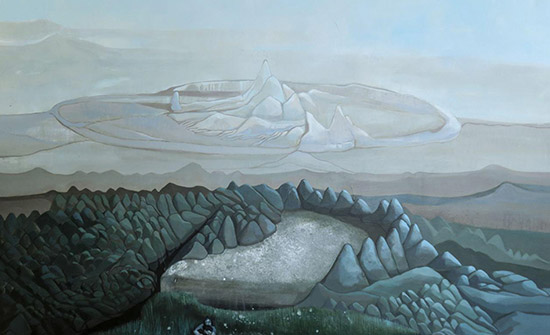
In a sense landscapes are creative renditions of a space, but what makes the landscapes in this section special is that they represent fictional worlds. Utopias such as Ramrajya, El Dorado, Kingdom of Saguenay, Beimini, Prester John’s Kingdom, and Zion have always charged our imagination and been the focus of several religious or materialistic quests and colonial missions. What makes utopian thinking relevant in the contemporary is the complete colonisation of time by extant capitalistic models that seek to check divergences from the norm, and their systematic decommissioning of our ability to imagine a world that is otherwise. In a context where monuments of the visions past (I am referring to the Hall of Nations) have been calculatingly demolished and puritanical myths such as the Ramrajya have been taken to an absurd conclusion, it becomes vital to re-align our utopian thinking and regain our ability to envision alternate worldings. Zahra Yazdani’s dreamscapes offer her an escape route from the conservative climate in her native Iran where various laws curb artistic and female expression in general. As such, building these fictional worlds becomes a way for the artist to reclaim her freedom. What’s most uplifting about her starkly stolid scenography is the moment of intimacy between loving breathing bodies huddling together for warmth as if the whole landscape has come together to offer privacy and protection to the beings who have stumbled upon these sites of refuge.
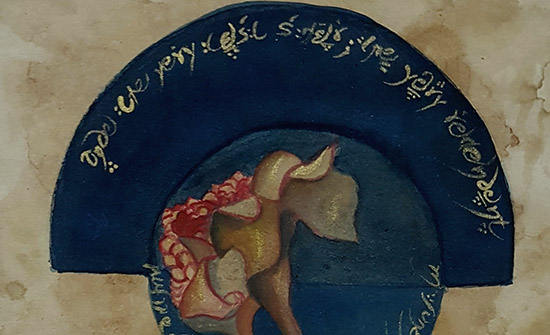
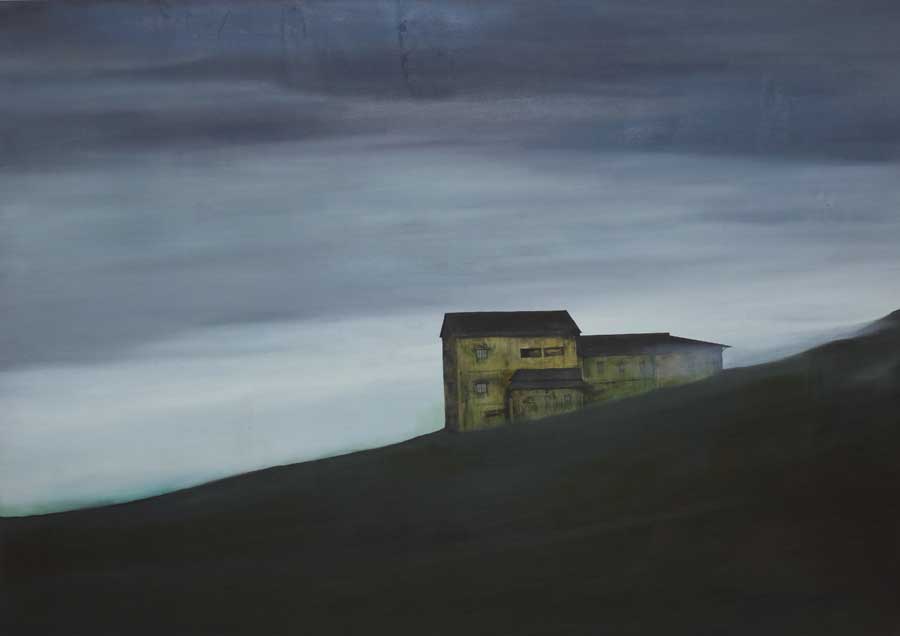
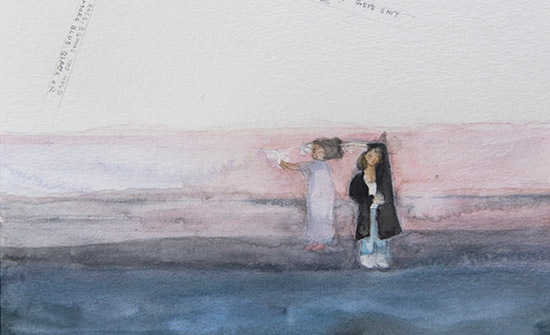
In a sense landscapes are creative renditions of a space, but what makes the landscapes in this section special is that they represent fictional worlds. Utopias such as Ramrajya, El Dorado, Kingdom of Saguenay, Beimini, Prester John’s Kingdom, and Zion have always charged our imagination and been the focus of several religious or materialistic quests and colonial missions. What makes utopian thinking relevant in the contemporary is the complete colonisation of time by extant capitalistic models that seek to check divergences from the norm, and their systematic decommissioning of our ability to imagine a world that is otherwise. In a context where monuments of the visions past (I am referring to the Hall of Nations) have been calculatingly demolished and puritanical myths such as the Ramrajya have been taken to an absurd conclusion, it becomes vital to re-align our utopian thinking and regain our ability to envision alternate worldings. Zahra Yazdani’s dreamscapes offer her an escape route from the conservative climate in her native Iran where various laws curb artistic and female expression in general. As such, building these fictional worlds becomes a way for the artist to reclaim her freedom. What’s most uplifting about her starkly stolid scenography is the moment of intimacy between loving breathing bodies huddling together for warmth as if the whole landscape has come together to offer privacy and protection to the beings who have stumbled upon these sites of refuge. D Priyanka’s suit of botanical drawings allow us rare views into the world of Lainika situated several lightyears away from planet Earth. The aerial charts are cosmic diagrams of the land inhabited by higher spirits, with geometric shapes symbolising distinct geo-social orderings extant on the planet, as observed from a god’s eye view. Madhurjya Dey employs a cinematic approach to his landscapes. The narrative that binds the individual frames together serves to counter the petrified prospect of the frame by sequencing different perspectives that avail a sense of movement to the works, drawing the viewer into the scene of action. The landscapes themselves are imbued with a romantic gothic sensibility entirely suited for a suspense-thriller narrativisation where poetic utterance instantiates the fictional space-time to an odd affect. By withholding the omniscience from the viewer as well as the certitude of her find, the work unsettles the ground beneath her feet, inverting expectations of subservience traditionally attached to landscape as perspective. Similarly, diaristic text in Tehmeena Firdos’ watercolours opens up another dimension to the spaces she appropriates from memories, media and fantasy. Going by a Bachelardian poetics of space, the text in Firdos’ works functions as architectural building blocks both literally and symbolically with the affective echo delineating the boundaries of space. By letting emotions and memories tint the lenses we train on landscapes, the artist seeks to qualify the sterile objectivity enforced on them with a subjectivity that sensitises us to a holistic understanding of space. The premise is if one is able to admit to the continuity of places with the memories they are awashed with then the task of drawing frontiers and parcelling out land becomes that much more complex.

 @knownunknown.art